
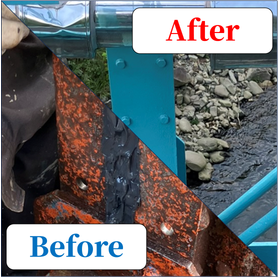
[Case Study] "Backing Plate Method" in Bridge Repair × Wear-Resistant Metal for Extended Lifespan
Suitable for the plate method with metal putty! 'KAN Putty Wear-Resistant Metal' can simultaneously expect adhesion, corrosion resistance, and wear resistance.
The "patching method" for repairing aging bridges is a practical technique that minimizes traffic impact with short construction periods and partial work. The key to success lies in selecting a metal putty that enhances the adhesion between the base material and the patch, equalizes stress transfer, and contributes to waterproofing and corrosion resistance. ■ Why is metal putty necessary? - Improved adhesion between the patch and the base material: Fills in irregularities and defects to create a uniform contact surface. - Ensured adhesion and durability: High adhesion, water resistance, and chemical resistance prevent long-term peeling. - Efficient stress transfer: Fills gaps to avoid stress concentration and stabilize reinforcement effects. - Waterproofing and rust prevention: Blocks the intrusion of moisture and air to suppress corrosion progression. - Improved workability: Easy to shape on-site and cures quickly, contributing to reduced construction time. ■ Wear-resistant Metal In this case, we introduce the repair using "KAN Putty Wear-resistant Metal," a metal putty repair material recommended for waterproofing, corrosion resistance, and repair linings that require high wear resistance, with a high content of alumina ceramic powder. It achieves reliable repairs in a short period, even for components with advanced corrosion, minimizing traffic regulation time. It contributes to both extending the lifespan and ensuring safety within limited budgets and personnel. ■ Construction Examples For more details, please refer to the "Detailed Information" section at the bottom of the page.
- Company:関西パテ化工
- Price:Other
